
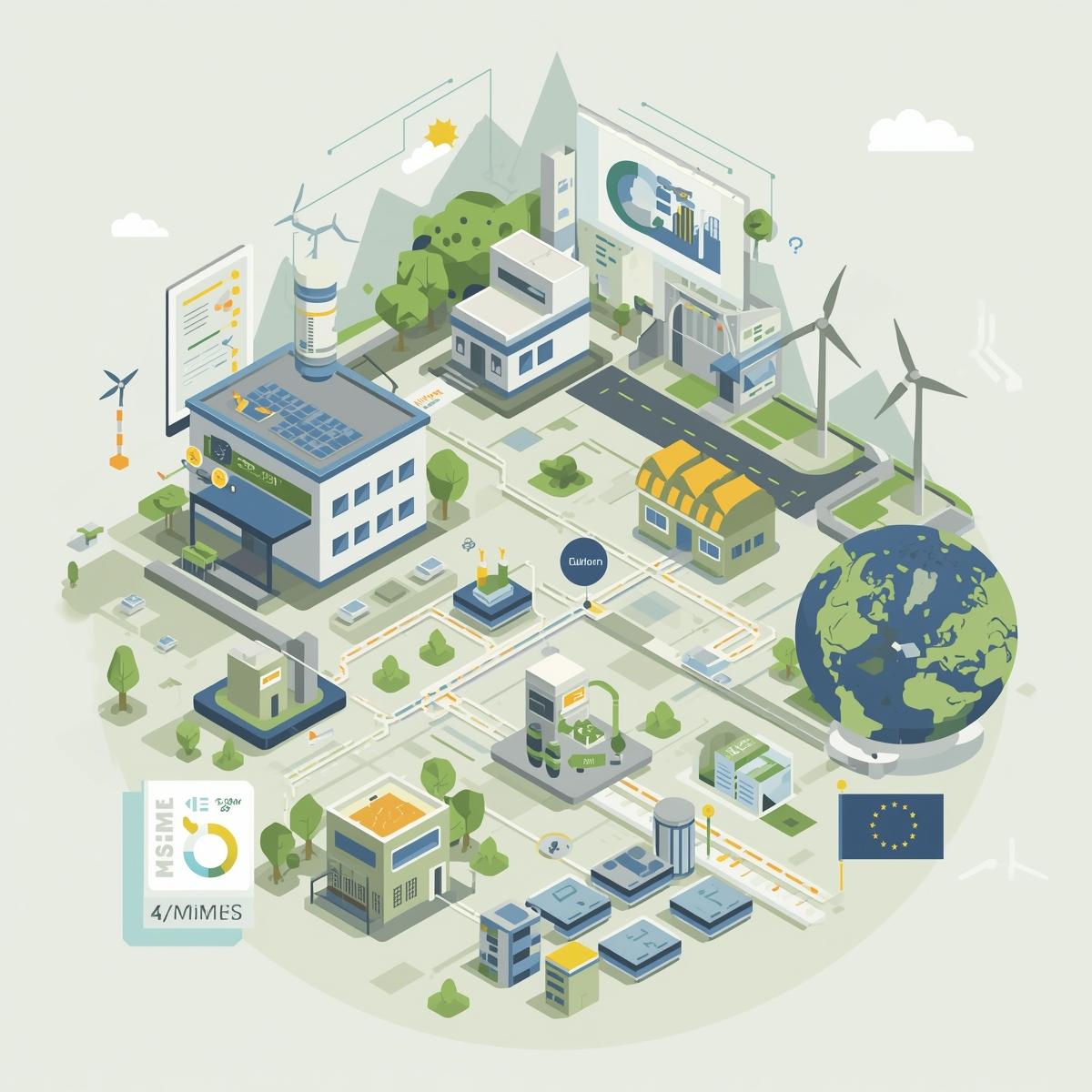
Climate change is no longer a distant concern—it is reshaping economies, trade, and business strategies worldwide. From extreme heatwaves in India and devastating floods in Europe to melting glaciers in the Himalayas, the impacts are visible everywhere. For businesses, especially those linked to global supply chains, the climate agenda is now a direct business agenda.
In 2015, the Paris Agreement at COP 21 brought 196 countries together to commit to limiting global warming to 1.5–2°C above pre-industrial levels. Since then, countries have set ambitious decarbonization targets: the European Union (EU) aims for carbon neutrality by 2050, while India has committed to a net-zero target by 2070.
To meet these goals, the EU has introduced several progressive climate policies, one of the most impactful being the Carbon Border Adjustment Mechanism (CBAM). For Indian exporters, particularly micro, small, and medium enterprises (MSMEs), CBAM could be a game-changer—posing both risks and opportunities.
What is CBAM and Why Should Indian MSMEs Care?
The Carbon Border Adjustment Mechanism is a policy that ensures imported goods into the EU face the same carbon costs as EU-manufactured goods. Its primary purpose is to prevent carbon leakage—the practice of shifting production to countries with weaker climate rules to avoid carbon costs.
CBAM will initially apply to sectors that are both carbon-intensive and trade-exposed:
- Iron and steel
- Cement
- Aluminium
- Fertilisers
- Electricity
- Electricity
- Hydrogen
While these may seem like large-scale industries, the reality is that MSMEs play a critical role as suppliers, sub-contractors, and value chain partners in these sectors. Globally, MSMEs represent 80–90% of supply chains. In India, they are not only the backbone of domestic manufacturing but also account for over 40% of the country’s exports.
According to the Ministry of MSME, 15.25% of MSME exports were directed to the EU in 2023–24, making compliance with CBAM a pressing issue for Indian businesses that wish to maintain access to this crucial market.
CBAM Timeline: The Transition Window is Narrow
- Transitional Phase (October 1, 2023 – December 31, 2025): Importers into the EU must start reporting embedded carbon emissions in their goods. While no financial penalties apply in this phase, it is a critical preparation window.
- Definitive Phase (Begins January 1, 2026): Importers will need to purchase CBAM certificates equivalent to the carbon price that would have been paid if the goods were produced under the EU’s Emissions Trading System (ETS). This means a direct financial cost for exporters that cannot demonstrate low-carbon production.
For Indian MSMEs, this timeline underscores urgency: just two years remain to build capacity, measure emissions, and adapt operations.
Key Challenges for Indian MSMEs Under CBAM
1. Limited Awareness of Global Climate Regulations
Many Indian MSMEs are still unfamiliar with CBAM, carbon pricing, or even the basics of greenhouse gas (GHG) accounting. Without immediate awareness-building, exporters risk losing competitiveness.
2. Limited Access to Carbon Measurement Tools
Accurate carbon footprinting requires specialized tools, digital platforms, and expertise. For MSMEs operating on thin margins, this capability gap is a major barrier.
3.Knowledge Gaps in Low-Carbon Solutions
Low-carbon transition options—such as renewable energy integration, alternative fuels, energy efficiency upgrades, and circular waste management—exist but are not widely known or accessible to smaller enterprises.
4.High Costs and Inadequate Access to Green Finance
Transitioning to low-carbon technologies involves upfront investment. Traditional financing is costly and complex, and many MSMEs struggle to access credit. Without affordable green finance options, progress will remain
Turning Compliance into Opportunity
While CBAM poses challenges, it can also act as a catalyst for transformation. For Indian MSMEs, aligning with global sustainability standards can:
- Secure Market Access: Ensuring compliance protects EU export revenues.
- Enhance Competitiveness: Early movers will gain preference in global supply chains that demand sustainability.
- Improve EfficiencyEnergy and resource savings can reduce operational costs.
- Attract Green Investment: Investors increasingly favor businesses aligned with climate goals.
By taking proactive steps, MSMEs can reposition themselves as trusted partners in low-carbon global value chains.
Immediate Steps Indian MSMEs Should Take
- Begin emissions tracking now using standardized methods (GHG Protocol, ISO standards).
- Collaborate with buyers and large corporations to align on reporting requirements.
- Adopt energy-efficient practices and gradually shift towards renewable energy sources.
- Explore circular economy solutions such as recycling, waste reduction, and sustainable raw materials.
- Seek technical support and capacity building from sustainability consultants and industry associations.
- Leverage green financing instruments such as sustainability-linked loans, green bonds, or NBFC-supported credit.
The Ecosystem Approach: Collaboration is Essential
Indian MSMEs cannot navigate CBAM in isolation. Policymakers, banks, NBFCs, large corporations, and sustainability service providers must work together to:
- Build awareness programs that simplify CBAM requirements.
- Provide technical training and digital platforms for emissions measurement.
- Develop affordable green finance products tailored to MSME needs.
- Facilitate innovation partnerships between MSMEs and solution providers.
If this ecosystem is built quickly, Indian MSMEs can turn CBAM from a compliance burden into a competitive advantage.
How TatvaEdge Can Help Indian MSMEs
At TatvaEdge, we understand that the future of trade is green. Our consultancy is designed to help Indian MSMEs:
- Measure and report carbon emissions in line with international standards.
- Build supply chain transparency and traceability.
- Identify and adopt low-carbon technologies suited to their scale.
- Connect with financing partners to unlock affordable green finance.
Rooted in Sustainability. Driven by Strategy.
With CBAM’s definitive phase less than two years away, the time to act is now. Indian MSMEs that embrace sustainability today will not only safeguard their exports but also strengthen their role as leaders in the global low-carbon economy.
